
Contractors
Explore Participation
The ACSA Safety Culture & High Reliability Organization (HRO) Demonstration & Evaluation Project provides Contractors with an opportunity to evaluate a different approach to contractor performance assurance.
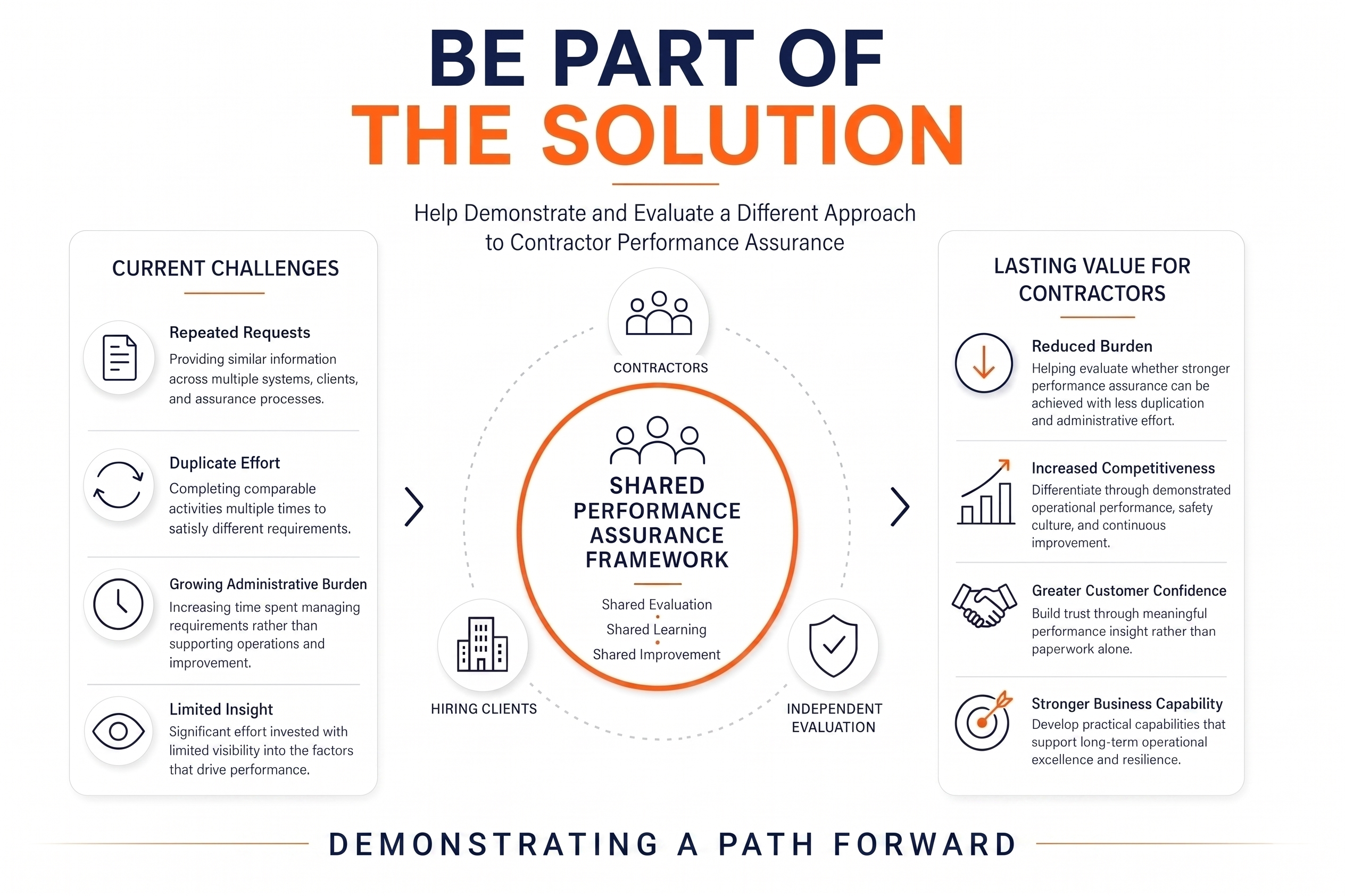
The project is demonstrating and evaluating whether a Shared Performance Assurance Framework can provide a more effective approach to contractor performance assurance, one that strengthens performance assurance while reducing complexity, duplication, and burden across the contractor ecosystem.
For many Contractors, managing safety today means navigating multiple registries, client requirements, audits, evaluations, improvement initiatives, and performance reporting expectations. While intended to improve safety outcomes, these activities can create significant administrative burden, duplication, and cost.
The objective is not to add another requirement, but to demonstrate a shared approach to contractor performance assurance.
Participation is voluntary and designed to create measurable value for Contractors through improved operational visibility, targeted improvement support, and ongoing performance insight.
Be Part of the Solution
Contractors have consistently identified concerns regarding:
- Multiple contractor registries
- Duplicate assurance activities
- Repetitive audits and evaluations
- Inconsistent client requirements
- Increasing administrative burden
The industry recognizes these challenges.
The Demonstration & Evaluation Project provides Contractors with an opportunity to actively participate in demonstrating and evaluating whether a Shared Performance Assurance Framework can provide a more effective approach to contractor performance assurance.
Most importantly, it provides Contractors with an opportunity to help evaluate and shape a potential solution rather than simply adapting to another industry initiative.
Rather than having change imposed upon them, participating Contractors help assess whether a Shared Performance Assurance Framework can create a more effective and efficient model for contractor performance assurance.
Participating Contractors play an important role in demonstrating whether a shared industry approach can strengthen performance assurance while reducing duplication, complexity, and burden.
What the Project Is Demonstrating & Evaluating
Reduced Complexity & Burden
Evaluate whether a shared framework can reduce duplication, administrative effort, and overlapping contractor management requirements across the contractor ecosystem.
Stronger Operational Performance
Improve consistency, reliability, and effectiveness in how work is planned, managed, and executed.
Better Visibility Into Performance
Gain insight into Safety Culture, operational reliability, learning effectiveness, and the factors that influence performance outcomes.
Practical Improvement Support
Receive structured coaching, guidance, monitoring, and support focused on measurable improvement rather than administrative compliance.
What Participation Involves
The project has been intentionally designed to minimize disruption and time commitment by building on existing activities, systems, and resources already in place within participating organizations.
Participation is designed to integrate with activities Contractors are already undertaking as part of safety management, workforce development, risk management, and continuous improvement rather than create a separate program of work.
Exceptional Value for Participating Contractors
ACSA has subsidized participation to make the full evaluation, improvement, and monitoring process accessible to Contractors.
Contractor participation is available for a one-time fee of $5,000.
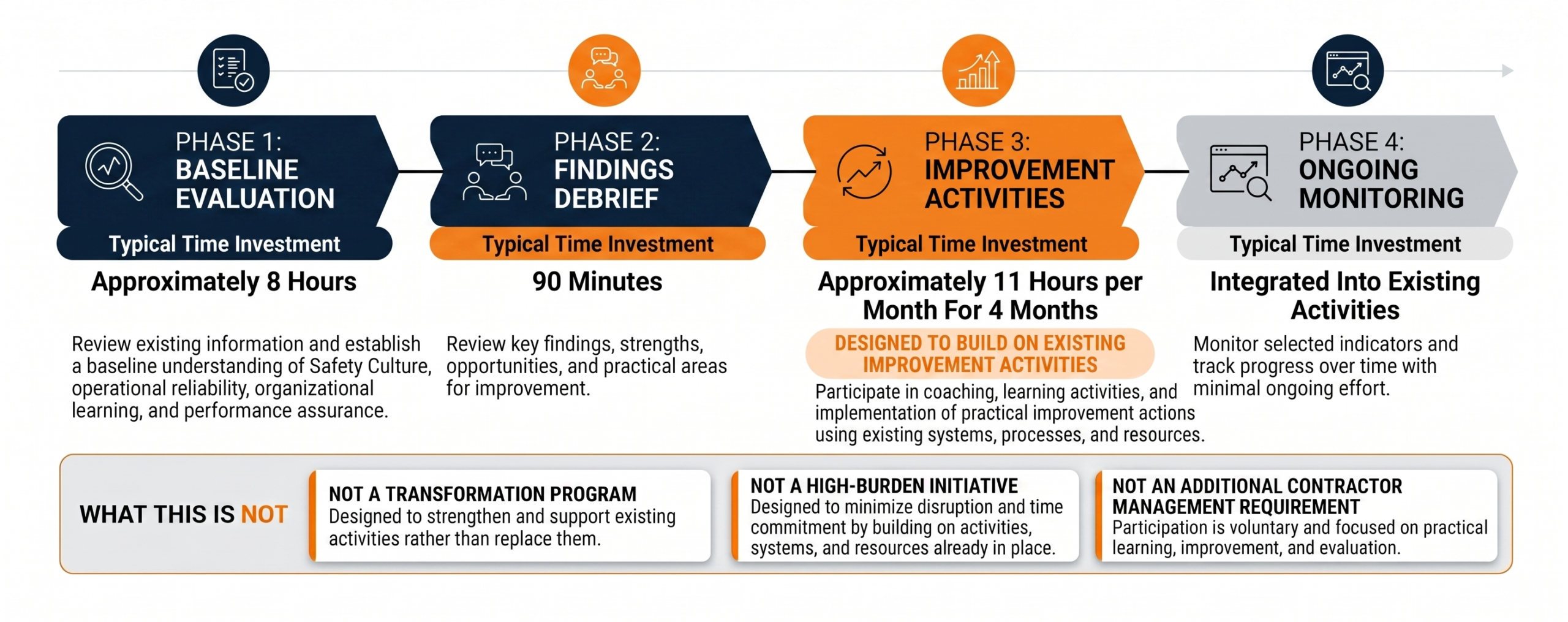
The project has been carefully designed to deliver practical value while minimizing disruption and building on systems, activities, and resources already in place. Participation includes a baseline evaluation and findings debrief, targeted improvement support, success coaching, practical tools, and ongoing performance monitoring.
Contractors gain clearer insight into the factors influencing safety and operational performance, together with structured support to strengthen performance and demonstrate improvement over time.
Participation does not require any future subscription or commitment to purchase additional services.
What Participating Provides
Creating Business Value
How the Demonstration Works
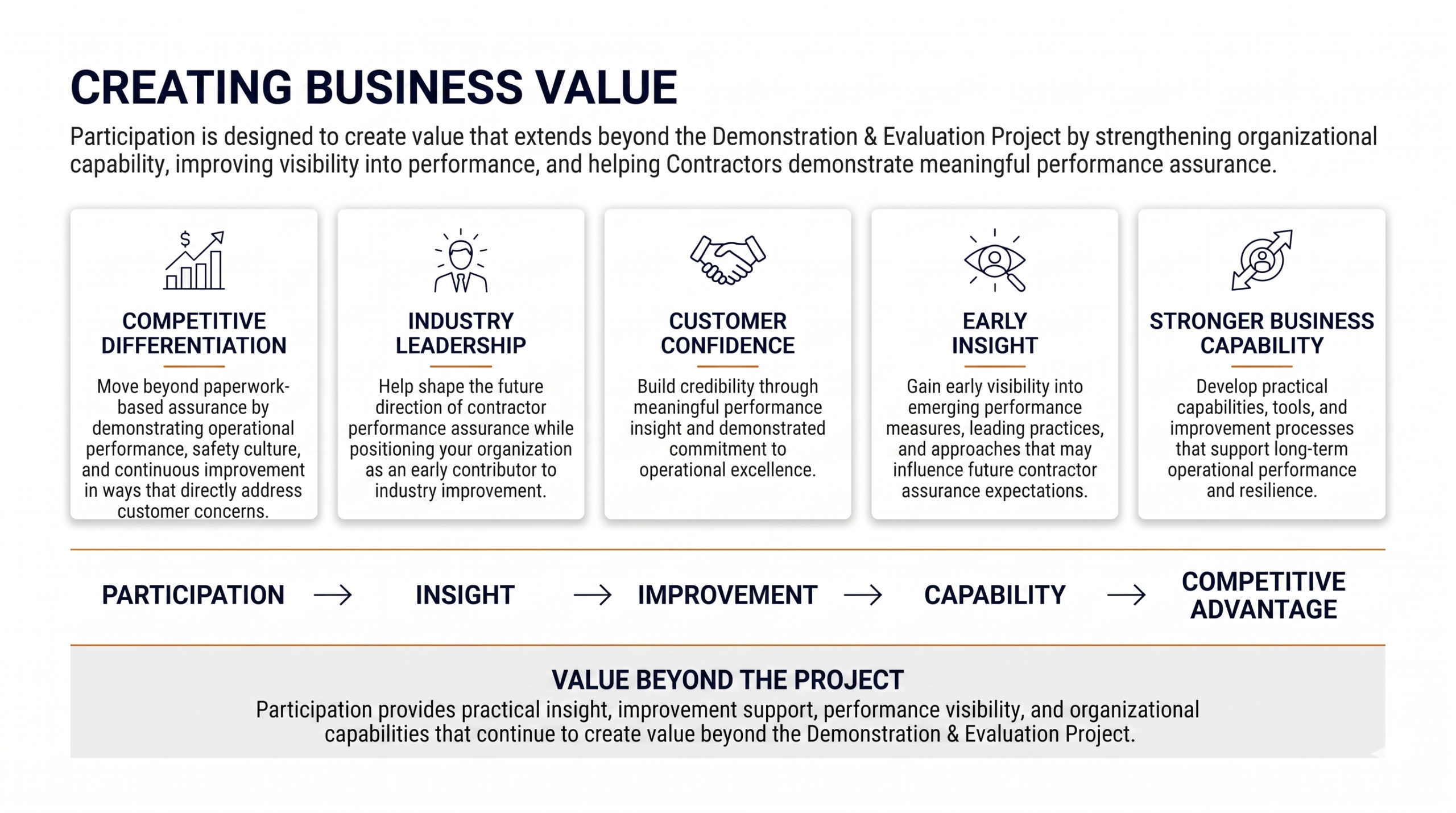
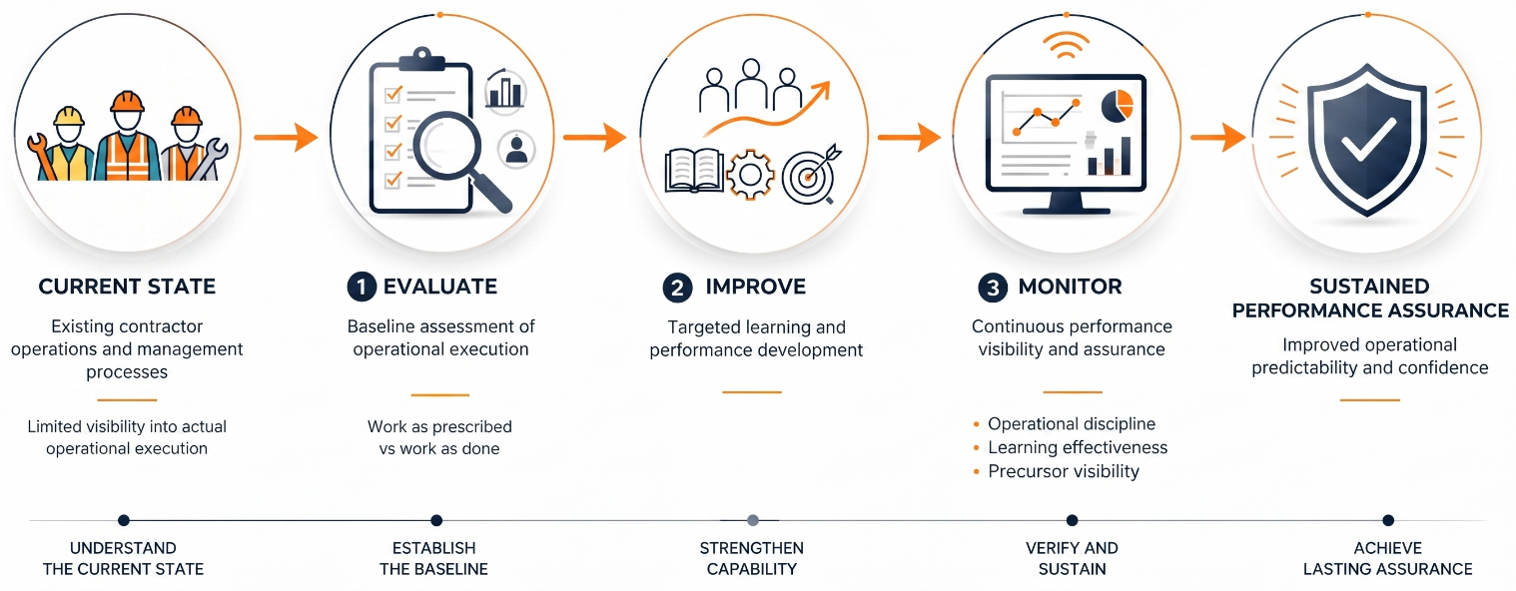
The project follows three structured phases designed to evaluate, improve, and monitor performance over time.
Phase 1 - Evaluate
A baseline assessment of how safety is managed and executed in practice, including operational risks, using existing information and processes.
The objective is to establish a baseline understanding of Safety Culture, operational reliability, learning effectiveness, and performance assurance.
Typical Commitment: Approximately 8 Hours
Phase 2 – Improve
Targeted coaching, learning, and practical improvement activities based on baseline findings.
This is not a wholesale transformation effort.
The focus is on strengthening key areas using existing systems, practices, and resources already in place within the organization.
Typical Commitment: Approximately 11 Hours per Month for 4 Months
Phase 3 – Monitor
Ongoing monitoring of selected indicators to understand progress and support continuous improvement.
Monitoring is integrated into existing management activities and designed to be low maintenance with minimal ongoing effort.
The objective is to provide visibility into improvement progress, performance trends, and ongoing performance assurance.
Participation Is Voluntary
Participation in the Demonstration & Evaluation Project is entirely voluntary.
Participation is not connected to:
- Client qualification status
- Procurement decisions
- Contract awards
- Existing contractor management requirements
Contractors participate because they see value in helping demonstrate and evaluate whether a Shared Performance Assurance Framework can provide a more effective approach to contractor performance assurance.
Frequently Asked Questions
ACSA is seeking Contractors that:
- Have more than 20 full-time workers
- Are interested in improving how safety performance is understood and managed
- Are open to contributing to an industry-wide initiative
Yes. ACSA has structured participation to be accessible to its members, with subsidy options available for Contractors.
There is no cost for Hiring Clients participating as observers.
No.
Participation in the Demonstration & Evaluation Project does not obligate your organization to subscribe to any future service or offering.
Following the demonstration, ACSA will review the findings and determine whether there is value in offering elements of this approach more broadly to members.
Any future participation would be entirely optional and decided at that time.
Participants may also withdraw from the project at any time should priorities or circumstances change.
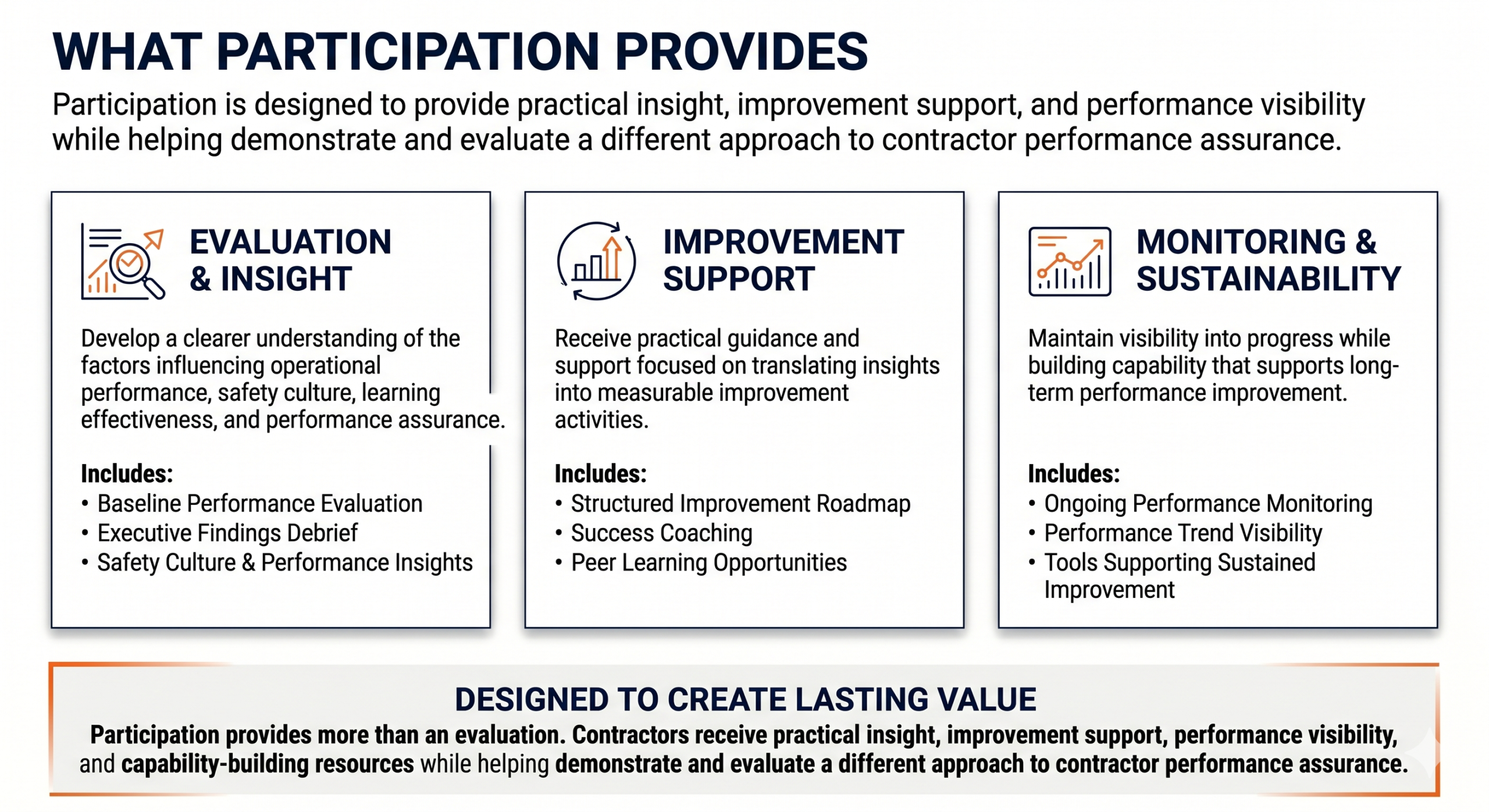
Early participants have an opportunity to help demonstrate, evaluate, and shape how this approach is applied in practice. They also gain early visibility into emerging performance measures, leading practices, and performance assurance concepts that may influence future industry expectations
Participation provides an opportunity to be a first mover rather than a future adopter should elements of the approach demonstrate value through the project.
Many existing approaches focus on what an organization has, including programs, documentation, certifications, and lagging indicators.
This project focuses on how safety is executed in practice, including how work is managed, how risks are addressed, how learning occurs, and how decisions are made in operational environments.
The objective is to provide visibility into the factors that influence performance rather than simply measuring compliance activities.
No. COR/SECOR remains the benchmark for a verified health and safety management system in Alberta.
This project focuses on operational performance assurance and is intended to complement not replace existing certification and audit processes.
Your data remains your own.
ACSA uses anonymized and aggregated insights to support industry-level learning and evaluation activities.
No identifiable information is shared without your consent.
The project’s data handling approach has been reviewed through an independent research ethics process to support appropriate use and protection of participant information.
Additional details will be provided prior to onboarding.
The High Reliability Organization (HRO) model is based on decades of research examining how organizations operating in complex, high-risk environments consistently achieve safe, reliable, and predictable outcomes.
HROs are characterized by:
- High reliability and quality performance
- Reduced operational disruption
- Strong risk awareness and learning capability
- The ability to operate safely and effectively in demanding environments
The Demonstration & Evaluation Project incorporates HRO principles to help evaluate factors that contribute to strong operational performance, reliability, and performance assurance.
Participation at a Glance
- Voluntary Participation
- Approximately 8 Hours for Baseline Evaluation
- 90-Minute Findings Debrief
- Approximately 11 Hours per Month for 4 Months
- Success Coaching and Improvement Support
- Visibility Into Safety Culture and Operational Performance
- Opportunity to Help Evaluate a Different Approach to Contractor Performance Assurance
- Opportunity to Be Part of the Solution
Meaningful improvement in contractor performance assurance cannot be achieved by Hiring Clients, Contractors, industry associations, or service providers working independently. Evaluating a shared industry approach requires active participation from the organizations that experience these challenges every day.
Contact us to learn more about participation.